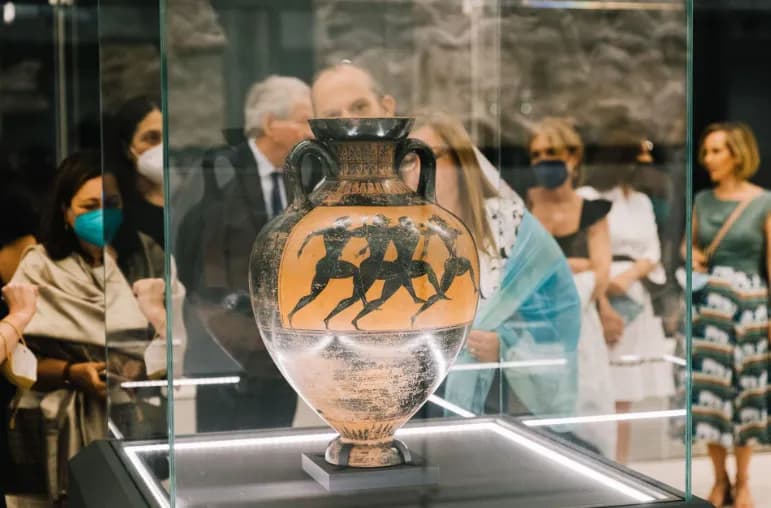
Israel Returns 22 Ancient Artifacts to Greece in Historic Cultural Agreement
ATHENS, GREECE — Israel has returned 22 ancient Greek artifacts to Greece following an investigation into illegal antiquities trafficking. The objects were formally handed over during a ceremony at the National Archaeological Museum in Athens on October 13, 2026, marking the first repatriation of ancient artifacts from Israel to Greece.
The collection includes 15 Attic pottery vessels, six Corinthian vessels, and a bronze figurine depicting a female figure. The objects are associated with the Archaic and Classical periods of ancient Greek history, with pottery dating approximately from the seventh through fourth centuries B.C. The authenticity of the bronze figurine remains under examination.
Among the returned artifacts are decorated oil containers, drinking vessels, and other ceramic objects featuring geometric designs and figures associated with Greek mythology. Some display black-figure and red-figure painting techniques, artistic traditions that provide important evidence about ancient Greek craftsmanship, cultural practices, and daily life.
The artifacts were recovered through an investigation conducted by Israeli authorities into the illegal antiquities trade. According to reporting on the case, the objects were seized during a 2020 operation involving the Israel Antiquities Authority, Israeli police, and tax authorities. Investigators recovered archaeological materials originating from several countries, including Greece.
The circumstances surrounding the original removal of the Greek objects have not been fully disclosed. However, their recovery and identification allowed Israeli authorities to coordinate with Greek officials and arrange their return.
Greek Culture Minister Lina Mendoni received the antiquities during the October 13 ceremony. Israel was represented by Ambassador Pninat Yanay and Amir Ganor, director of the Israel Antiquities Authority's Antiquities Theft Prevention Unit. Officials from both countries emphasized the importance of cooperation in identifying, recovering, and returning cultural property.
Mendoni described the handover as an important development in the relationship between Greece and Israel, noting that it was the first time Israel had formally returned a collection of antiquities to Greece. She also highlighted the need for international partnerships to combat the trafficking of archaeological objects.
Israeli representatives emphasized the shared importance of archaeology and historical preservation to both countries. Ancient artifacts provide physical evidence of civilizations that shaped the Mediterranean world, and their preservation allows researchers to study the history, artistic achievements, and cultural traditions of earlier societies.
The return comes as Greece continues its international efforts to recover archaeological treasures that were removed from the country. One of its most prominent campaigns concerns the Parthenon Marbles, ancient sculptures taken from Athens during the nineteenth century and currently held by the British Museum in London.
Although the returned objects are Greek rather than Israeli in origin, the handover demonstrates the role that Israeli archaeological authorities can play in international efforts to prevent illegal antiquities trafficking. The Israel Antiquities Authority regularly investigates the unauthorized excavation, possession, and sale of archaeological objects.
The illegal trade in antiquities presents significant challenges for archaeologists and cultural institutions worldwide. When artifacts are removed from archaeological sites without proper documentation, researchers can lose information about their original locations and the historical circumstances in which they were used.
This loss of archaeological context can make it more difficult to understand ancient communities, trade networks, religious practices, and cultural developments. International cooperation helps authorities identify stolen or illegally exported objects and return them to the countries where they originated.
Israel and Greece maintain diplomatic relations and cooperate in several areas, including regional security, energy, tourism, and cultural exchange. The return of the 22 antiquities adds another dimension to that relationship by demonstrating a shared commitment to protecting historical heritage.
The artifacts will remain under the care of Greek cultural authorities, allowing specialists to continue examining and preserving the collection. Their return represents an important example of how cooperation between national institutions can help protect archaeological discoveries for future generations.
References:
apnews/article/941a95dda1bd6c5e5943c3ab1b136828
timesofisrael/in-first-israel-returns-artifacts-to-greece-amid-push-to-secure-return-of-antiquities/
jpost/israel-news/article-911632
greekreporter/2026/10/13/greek-antiquities-repatriation-israel/